

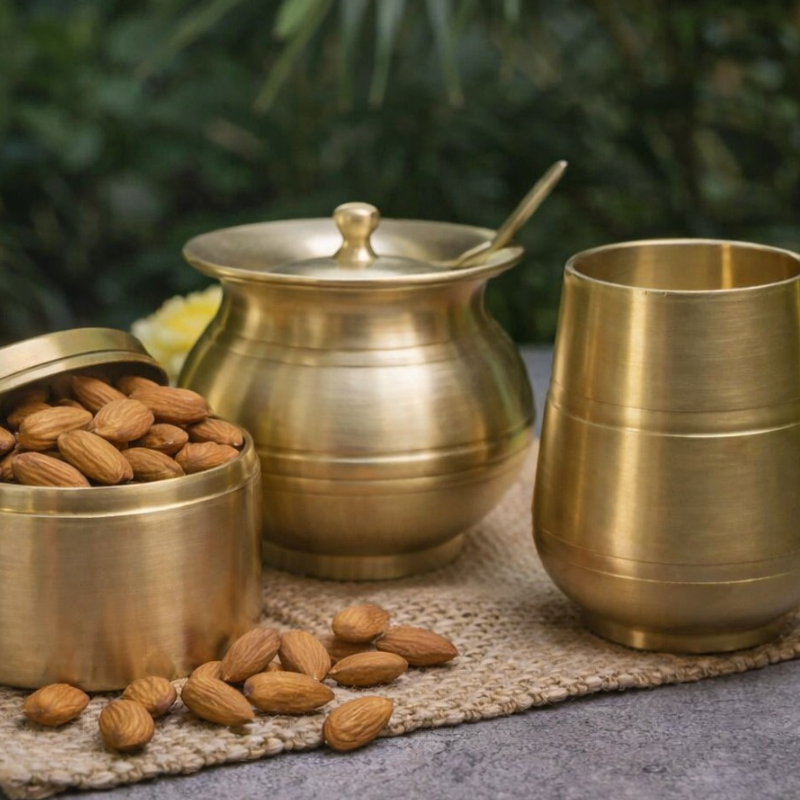
Kansa is having a moment again.
From heirloom thalis to wellness dining, more homes are returning to this traditional bronze alloy. But as demand grows, so does confusion.
Not everything labelled “kansa” is truly pure.
If you’re investing in metalware meant to last decades, here’s how to make sure you’re choosing wisely.
First, What Exactly Is Kansa?
Kansa is a traditional bronze alloy made primarily from copper and tin. It has been used in Indian households for generations for dining and ritual use.
Authentic kansa utensils are:
• Solid, not plated
• Dense and substantial
• Built for long term use
• Crafted through traditional alloy blending
They are not lightweight. They are not hollow. And they are definitely not meant to feel disposable.
5 Simple Ways to Identify Pure Kansa
You don’t need a laboratory. Just attention.
1. Feel the Weight
Pick it up.
Pure kansa has presence. It feels grounded and heavy in your hand. If it feels unusually light, it may be mixed with cheaper metals.
Heirloom Kansa pieces are meant to feel solid.
2. Listen Closely
Gently tap the Kansa piece.
Authentic kansa produces a clear, resonant ring. The sound lingers for a moment. It is distinct and sharp.
A dull or flat sound may indicate dilution.
3. Look at the Finish
Handcrafted kansa may not look machine perfect. You might see subtle variations from casting and hand polishing.
That is not a flaw. That is craft.
Perfect uniform shine can sometimes indicate coating or plating rather than solid alloy.
4. Ask Direct Questions
A serious brand should confidently answer:
• What is the alloy composition?
• Is it lead free?
• Is it lab tested?
If the response is vague, that is information in itself.
Transparency is a strong indicator of authenticity.
5. Check for Certification
Responsible heirloom brands conduct lab testing to ensure their alloy compositions are safe and free from harmful heavy metals within regulated limits.
Documentation matters. Especially when Kansa metalware touches your food.
Why Purity Matters So Much
Kansa is often used daily. For meals. For rituals. For gifting.
Impure alloys may:
• Compromise durability
• Affect safety
• Corrode unevenly
• Lose structural strength over time
Pure kansa, on the other hand, ages gracefully. It develops a soft patina. It holds memory.
A Note on Patina
If your Kansa utensil darkens slightly over time, don’t panic.
Natural metal reacts with air and use. That mellow deepening of tone is part of its character. It can be polished if you prefer shine, but many people cherish the patina as a sign of use and continuity.
Heirloom Kansa metalware is meant to evolve.


Leave a comment
All comments are moderated before being published.
This site is protected by hCaptcha and the hCaptcha Privacy Policy and Terms of Service apply.