

An Ambi Home Journal
Walk into any traditional Indian home, and you'll likely find metalware that has been treasured for generations. From serving bowls and decorative accents to heirloom dinnerware and ceremonial pieces, metals have long played an important role in Indian culture and craftsmanship.
Among the most celebrated are Kansa and Brass, two materials often admired for their beauty, heritage, and connection to traditional living. Yet despite their popularity, many people confuse the two.
At first glance, Kansa and Brass may appear similar. Both feature warm metallic tones, both have deep roots in Indian craftsmanship, and both are commonly used in home décor and dining ware. However, they are fundamentally different materials with distinct compositions, characteristics, and cultural significance.
For homeowners seeking authentic handcrafted pieces, understanding the difference between Kansa and Brass can help make more informed choices, not only from a functional perspective but also from a design and lifestyle standpoint.
At Ambi Home, we believe that every material carries a story. Knowing that story allows you to appreciate the objects in your home on a deeper level.
So, what exactly sets Kansa apart from Brass?
Understanding Kansa
Kansa, often referred to as bell metal, is a traditional alloy primarily made from copper and tin.
For centuries, it has been associated with Indian dining traditions, artisanal craftsmanship, and heritage living. Historically, Kansa vessels were found in households across India and were commonly used for serving and eating food.
What makes Kansa unique is its balance of strength, durability, and elegance. Unlike many modern materials designed for short term convenience, Kansa was traditionally crafted to last for generations.
Its appearance is often characterized by a soft golden brown tone that deepens beautifully with age. Rather than losing its charm over time, Kansa develops character, making each piece increasingly unique.
For many families, Kansa was never simply tableware. It was an heirloom.
Understanding Brass
Brass is an alloy made primarily from copper and zinc.
It has been used throughout history for decorative objects, musical instruments, architectural details, lighting fixtures, and household accessories.
Brass is known for its bright golden appearance, which closely resembles gold and makes it particularly attractive for decorative applications.
Because of its workability, artisans can easily shape brass into intricate forms and ornamental designs. This versatility has made it one of the most widely used metals in traditional Indian décor.
From temple lamps and statues to decorative trays and vases, brass has long been valued for its visual appeal and craftsmanship.
The Fundamental Difference: Composition
Kansa
-
Copper & Tin
-
Traditionally considered a bronze alloy
-
Denser and heavier
-
Known for durability and resonance
Brass
-
Copper & Zinc
-
Distinct alloy category
-
More malleable
-
Easier to shape into decorative forms
Although both contain copper, the secondary metal dramatically influences their properties, appearance, and traditional applications.
This difference is why Kansa and Brass should never be considered interchangeable materials.
Appearance: Warm Sophistication vs Bright Brilliance
One of the first things people notice when comparing Kansa and Brass is their appearance.
Kansa's Aesthetic
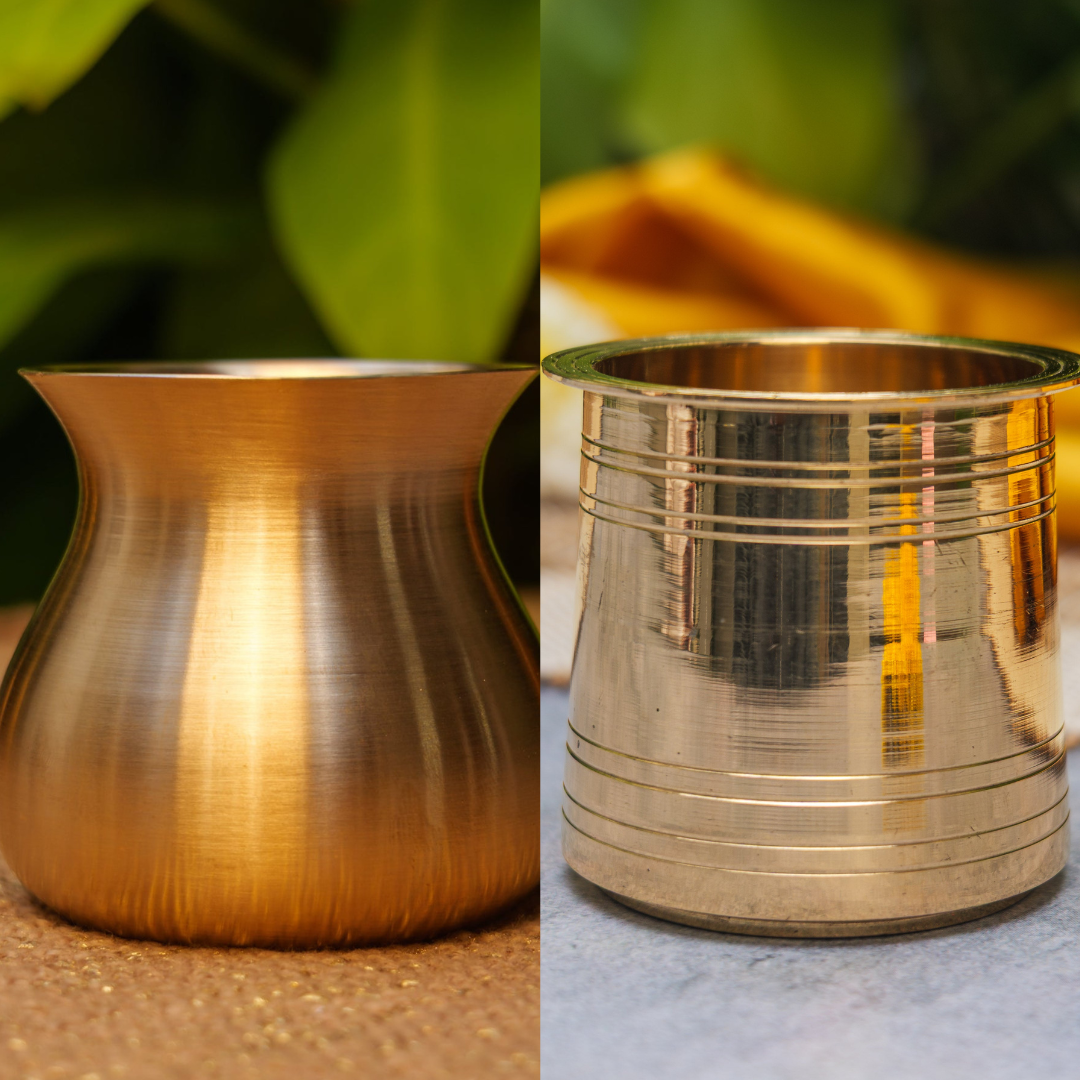
Kansa has a more subdued and sophisticated visual character.
Its tones often range from muted gold to warm bronze, creating a rich and understated elegance.
Rather than demanding attention, Kansa brings depth and warmth to a space.
Its surface reflects light softly, making it particularly appealing in homes that embrace natural materials and timeless design.
As it ages, Kansa develops a beautiful patina that many collectors and design enthusiasts appreciate.
Brass's Aesthetic
Brass is brighter and more reflective.
Its appearance is often compared to polished gold due to its vibrant yellow gold hue.
Because of its brilliance, brass naturally attracts attention and works well as a statement material.
In decorative settings, brass can create a sense of luxury and visual impact, particularly when polished to a high shine.
For homeowners seeking bold accents, brass often becomes the preferred choice.
Kansa vs Brass in Modern Interior Design
Both metals have a place in contemporary interiors, but they create very different visual experiences.
Kansa in Modern Homes
Kansa complements:
-
Organic modern interiors
-
Minimalist spaces
-
Heritage inspired homes
-
Contemporary dining settings
-
Neutral colour palettes
Its understated appearance allows it to integrate seamlessly into a variety of design styles.
Kansa feels grounded, timeless, and quietly luxurious.
Brass in Modern Homes
Brass complements:
-
Glamorous interiors
-
Art Deco influences
-
Eclectic spaces
-
Statement décor arrangements
-
Bold design concepts
Because of its brightness, brass often serves as a focal point rather than a supporting element.
It brings energy and visual contrast into a room.
Craftsmanship and Artisanal Heritage
Both Kansa and Brass have strong ties to traditional Indian craftsmanship.
However, their cultural roles have historically differed.
Kansa's Legacy
Kansa has traditionally been associated with dining, hospitality, and daily rituals.
Many households considered Kansa vessels essential parts of family life.
Because these pieces were used regularly, they often became deeply connected to family memories and traditions.
A Kansa plate might witness thousands of shared meals over multiple generations.
This emotional connection contributes significantly to Kansa's enduring appeal.
Brass's Legacy
Brass has historically played a larger role in decorative and ceremonial applications.
Temples, homes, and cultural spaces frequently feature brass lamps, statues, bells, and ornamental objects.
Its bright appearance made it ideal for pieces intended to create visual impact.
Even today, brass remains one of the most popular materials for traditional decorative craftsmanship.
Durability and Longevity
When investing in handcrafted homeware, durability is an important consideration.
Kansa
Kansa is known for exceptional longevity.
With proper care, Kansa pieces can remain functional and beautiful for decades.
Many families continue using Kansa items inherited from grandparents or even great grandparents.
The material's durability contributes to its reputation as an heirloom metal.
Brass
Brass is also durable and long lasting.
However, because brass is often used in decorative applications, its longevity is usually appreciated from an aesthetic rather than utilitarian perspective.
Like Kansa, brass develops a natural patina over time.
Some homeowners choose to maintain a polished finish, while others appreciate its aged appearance.
Which Metal Feels More Timeless?
This question ultimately comes down to personal preference.
Brass often reflects changing design trends. It experiences cycles of popularity in interior design, appearing prominently in certain eras before evolving into new expressions.
Kansa feels different.
Its appeal is rooted less in trends and more in tradition.
The same qualities that made Kansa desirable centuries ago continue to make it desirable today:
-
Authentic craftsmanship
-
Enduring beauty
-
Functional elegance
-
Cultural heritage
-
Generational value
Because of this, Kansa often feels remarkably timeless.
Sustainability and Conscious Living
As more homeowners embrace sustainable lifestyles, longevity has become an important factor in material selection.
The most sustainable products are often those that remain useful and relevant for decades.
Both Kansa and Brass align with this philosophy.
However, Kansa's traditional role as heirloom dining ware gives it a unique connection to slow living and mindful consumption.
Rather than purchasing objects designed for replacement, homeowners are increasingly investing in pieces that become permanent parts of their homes.
This shift reflects a broader appreciation for quality over quantity.
At Ambi Home, we see this movement as a return to thoughtful living, one that values craftsmanship, durability, and meaningful design.
Kansa or Brass: Which Should You Choose?
The answer depends on what you're looking for.
Choose Kansa if you appreciate:
-
Heritage craftsmanship
-
Timeless dining ware
-
Understated luxury
-
Organic, natural aesthetics
-
Heirloom quality pieces
-
Slow living and mindful design
Choose Brass if you prefer:
-
Decorative statement pieces
-
Bright golden finishes
-
Ornamental craftsmanship
-
Bold visual accents
-
Traditional décor objects
-
Classic luxury styling
Many beautifully designed homes incorporate both metals, using each where its strengths shine most effectively.
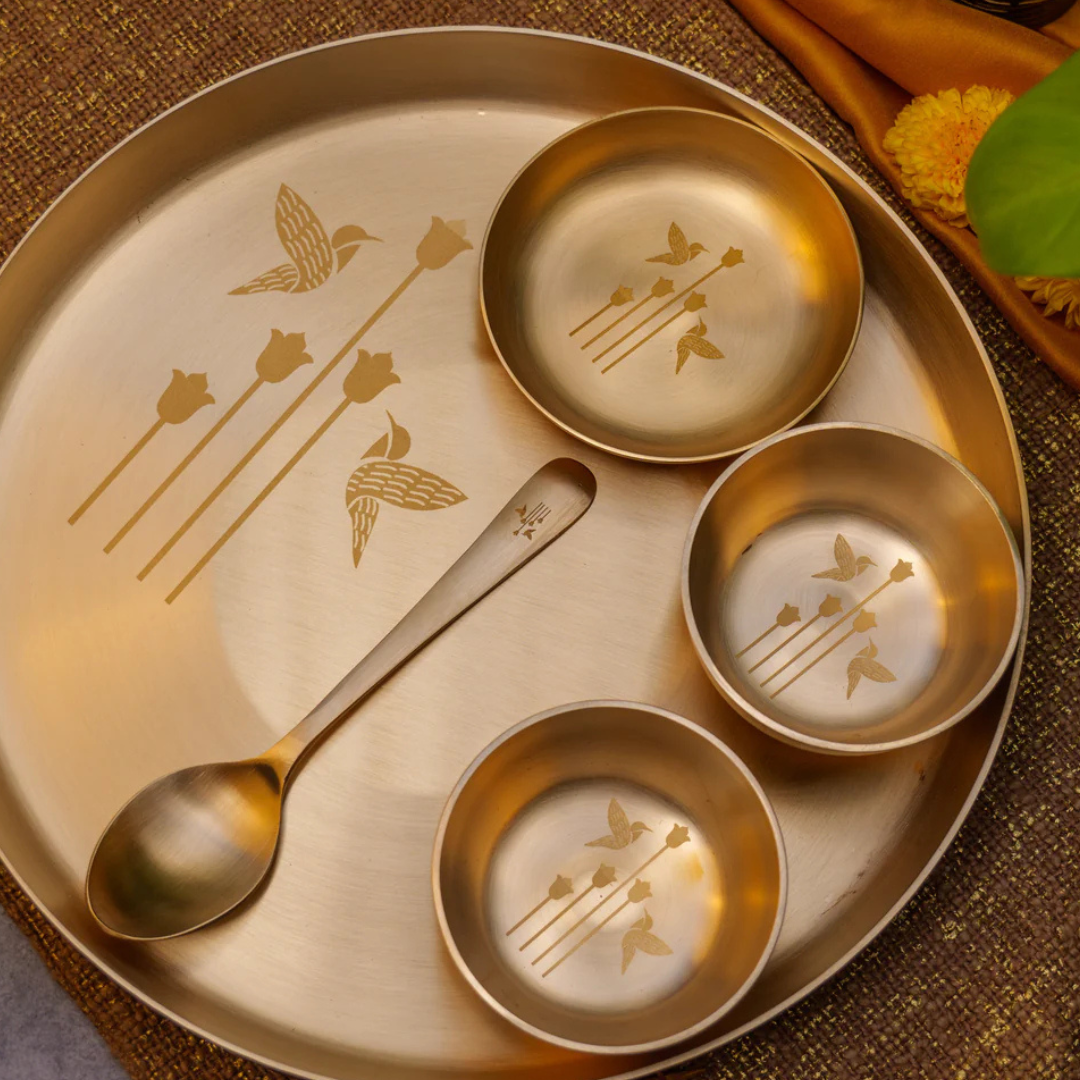
For example, a Kansa dinner set can anchor the dining table with its understated warmth, while a brass serving tray can introduce a brighter decorative accent.
The Ambi Home Perspective
At Ambi Home, we celebrate materials that tell stories.
Both Kansa and Brass represent centuries of Indian craftsmanship and artistry. Both deserve appreciation for the cultural traditions they preserve.
Yet there is something uniquely compelling about Kansa.
Its quiet elegance, enduring functionality, and connection to everyday rituals give it a depth that extends beyond aesthetics. It is a material that becomes part of daily life, gathering memories and meaning with every passing year.
While Brass often captures attention through its brilliance, Kansa earns admiration through its character.
And perhaps that is why Kansa continues to resonate so strongly with modern homeowners.
In a world increasingly focused on conscious living, timeless design, and meaningful craftsmanship, Kansa offers more than beauty. It offers a connection to heritage, authenticity, and a slower, more intentional way of life.
Because the most remarkable objects are not always the ones that shine the brightest.
Sometimes, they are the ones that stay with us the longest.


Leave a comment
This site is protected by hCaptcha and the hCaptcha Privacy Policy and Terms of Service apply.