

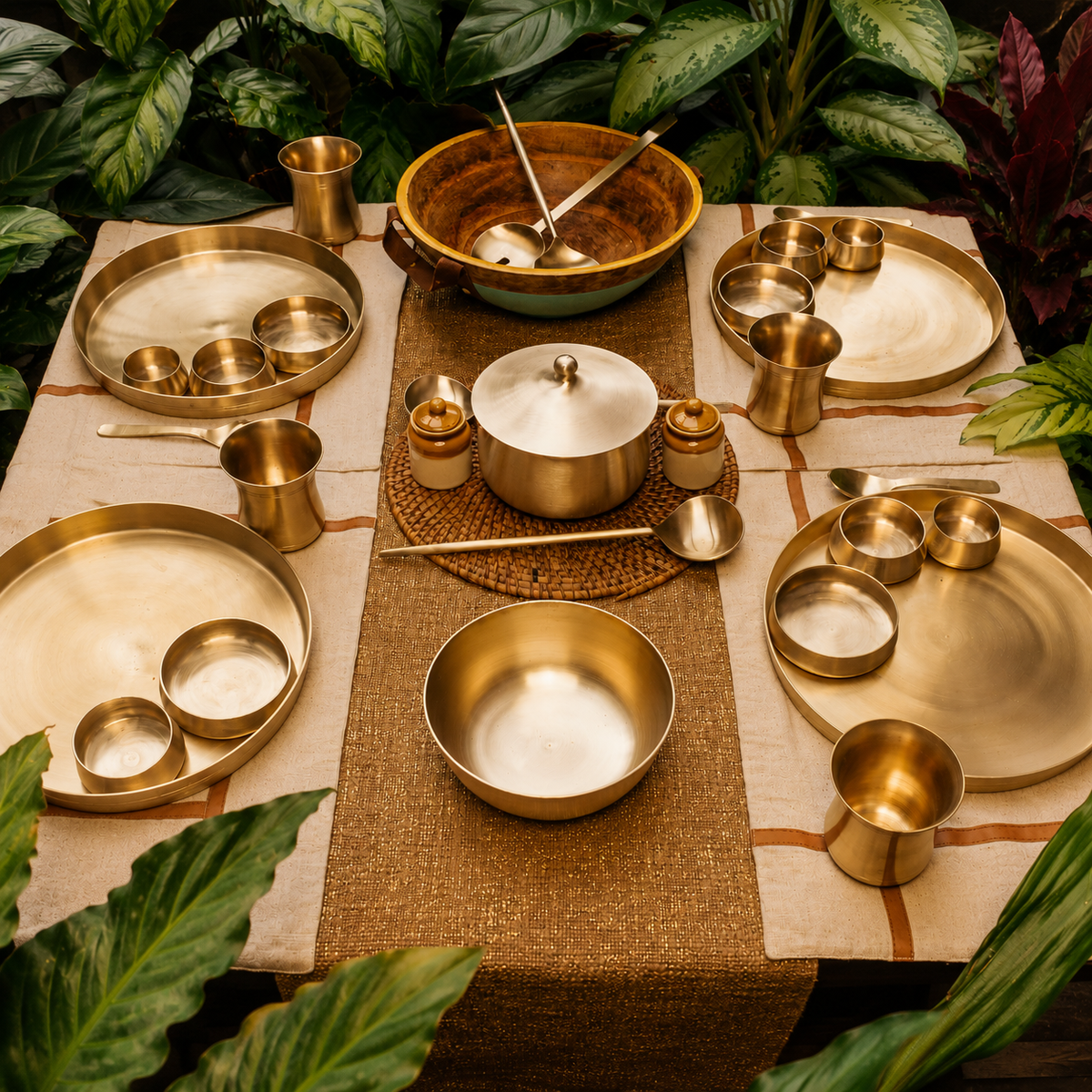
In a world where trends come and go at lightning speed, some materials possess a rare ability to remain timeless. They transcend generations, outlive changing design movements, and continue to find relevance in every era. Kansa is one such material.
For centuries, Kansa has been a cherished part of Indian homes. It has graced dining tables, accompanied festive celebrations, and been passed down as treasured heirlooms from one generation to the next. Yet today, Kansa is experiencing a remarkable revival, not as a relic of the past, but as a symbol of conscious living, artisanal craftsmanship, and enduring beauty.
As modern homeowners increasingly seek authenticity over excess, craftsmanship over mass production, and heritage over fleeting trends, Kansa has emerged as more than just a traditional metal. It has become a reflection of a lifestyle, one rooted in mindfulness, quality, and a deeper appreciation for the objects we bring into our homes.
At Ambi Home, we believe that every piece in a home should tell a story. Kansa tells one of India's most enduring stories: a story of artistry, culture, and timeless design.
But what exactly is Kansa, and why does it continue to captivate generations?
Understanding Kansa: More Than Just a Metal
Kansa, also known as bell metal, is a traditional alloy primarily made from copper and tin. While its composition may sound simple, its significance extends far beyond its material structure.
For thousands of years, Kansa has occupied a unique place in Indian culture. Unlike materials that were valued purely for utility, Kansa became deeply intertwined with daily life, traditions, rituals, and family heritage.
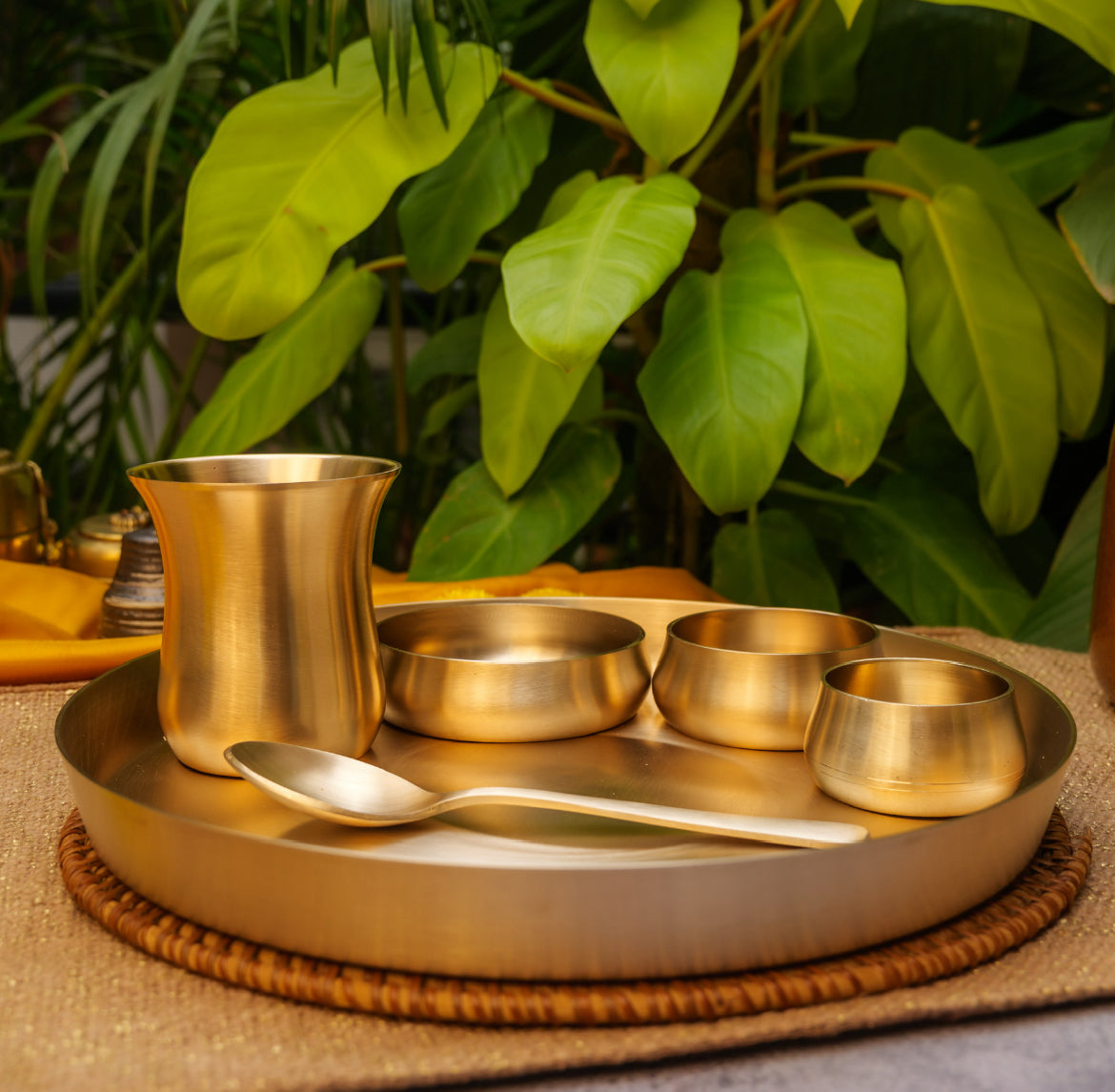
Historically, Kansa vessels were found in nearly every Indian household. Plates, bowls, serving dishes, tumblers, and ceremonial objects crafted from Kansa were considered symbols of prosperity, refinement, and mindful living. Families invested in Kansa pieces not for convenience but for longevity. These were objects created with the expectation that they would remain part of the family for decades, often generations.
This perspective feels particularly meaningful today.
Modern consumer culture often encourages replacement. New collections arrive every season, and products are designed with short life cycles in mind. Kansa represents the opposite philosophy. It was created to endure, to age gracefully, and to become more meaningful over time.
Perhaps that is why it continues to resonate with modern homeowners seeking a deeper connection with their spaces.
The Rich Heritage Behind Kansa
To truly appreciate Kansa, it is important to understand its cultural roots.
Indian craftsmanship has always celebrated the relationship between utility and beauty. Everyday objects were rarely designed to be merely functional. Instead, they were infused with artistry, symbolism, and intention.
Kansa embodies this tradition perfectly.
For centuries, skilled artisans across India developed techniques for shaping and refining Kansa into objects that balanced practicality with elegance. These craftsmen understood that the objects people use daily have the power to shape experiences and create memories.
A meal shared on handcrafted Kansa dinnerware was not simply about nourishment.
It was about gathering.
It was about connection.
It was about tradition.
Many households reserved their finest Kansa pieces for special occasions, festivals, and family celebrations. Over time, these objects became witnesses to life's most cherished moments.
Birthdays.
Weddings.
Religious ceremonies.
Festive feasts.
Family reunions.
Each use added another layer to their story.
Unlike disposable products, Kansa pieces accumulated memories. They became part of a family's history.
Today, as people increasingly seek meaningful alternatives to mass produced goods, this sense of heritage feels more valuable than ever.
Why Kansa Is Making a Modern Comeback
The renewed interest in Kansa is not driven by nostalgia alone.
It reflects broader shifts in how people think about their homes and lifestyles.
Across the world, consumers are moving away from mindless consumption and embracing more intentional choices. They are questioning whether the products they buy align with their values. They are looking for craftsmanship, sustainability, authenticity, and longevity.
Kansa naturally embodies these qualities.
Unlike many contemporary materials, Kansa carries a story that extends far beyond the moment of purchase. Every piece reflects generations of artisan knowledge and centuries of cultural heritage.
It is not simply an object.
It is a continuation of a tradition.
For modern homeowners, this creates a deeper emotional connection. Owning a handcrafted Kansa piece feels different from purchasing something mass produced because it represents a conscious decision to invest in quality, craftsmanship, and cultural preservation.
This is precisely why Kansa has found new relevance in contemporary homes.
The Beauty of Handcrafted Imperfection
One of the most compelling aspects of Kansa is its handcrafted nature.
In an age where manufacturing processes prioritize uniformity, Kansa celebrates individuality.
No two handcrafted pieces are ever completely identical.
Subtle variations in texture, finish, and detailing are not flaws, they are evidence of human artistry.
These distinctions tell a story.
They reveal the hand of the artisan.
They remind us that someone carefully shaped, refined, and perfected the piece over time.
At Ambi Home, we believe these imperfections are what make handcrafted objects truly beautiful.
Mass produced products often strive for perfection through replication. Handcrafted objects achieve beauty through character.
The slight variation in a bowl's surface.
The gentle hammer marks that catch the light.
The evolving patina that develops over years of use.
These qualities create a sense of authenticity that machines simply cannot replicate.
As homeowners increasingly seek spaces that feel personal and meaningful, handcrafted materials like Kansa offer something invaluable: individuality.
Kansa and the Philosophy of Slow Living
The growing appreciation for Kansa is closely connected to the rise of slow living.
Slow living is not about doing everything slowly. Rather, it is about living intentionally. It encourages people to focus on quality over quantity, presence over distraction, and meaning over excess.
This philosophy extends naturally into the home.
The objects we choose influence how we experience our daily routines. A thoughtfully designed space encourages mindfulness. Beautiful, well crafted objects invite appreciation.
Kansa fits perfectly within this mindset.
There is a certain ritualistic quality to using handcrafted metalware. Its weight feels substantial. Its texture feels authentic. Its presence commands attention in a quiet, understated way.
Rather than disappearing into the background, Kansa encourages engagement.
It transforms ordinary moments into meaningful experiences.
A family meal becomes a gathering.
A serving platter becomes a centerpiece.
An everyday object becomes a reminder to slow down and appreciate the present moment.
In a fast paced world, these small shifts can have a profound impact on how we experience our homes.
The Timeless Appeal of Natural Materials
One reason Kansa continues to feel relevant across generations is its connection to natural materials and traditional craftsmanship.
Unlike synthetic alternatives that often prioritize convenience, natural materials carry a sense of warmth and authenticity.
Wood develops character over time.
Stone reveals unique patterns.
Handmade ceramics showcase subtle variations.
Kansa belongs within this family of timeless materials.
Its warm metallic tones create a visual richness that feels both sophisticated and approachable. Depending on the light, Kansa can appear golden, bronze, or softly muted, bringing depth and texture to a space.
More importantly, it evolves.
Many modern products are designed to resist change entirely. Kansa embraces it.
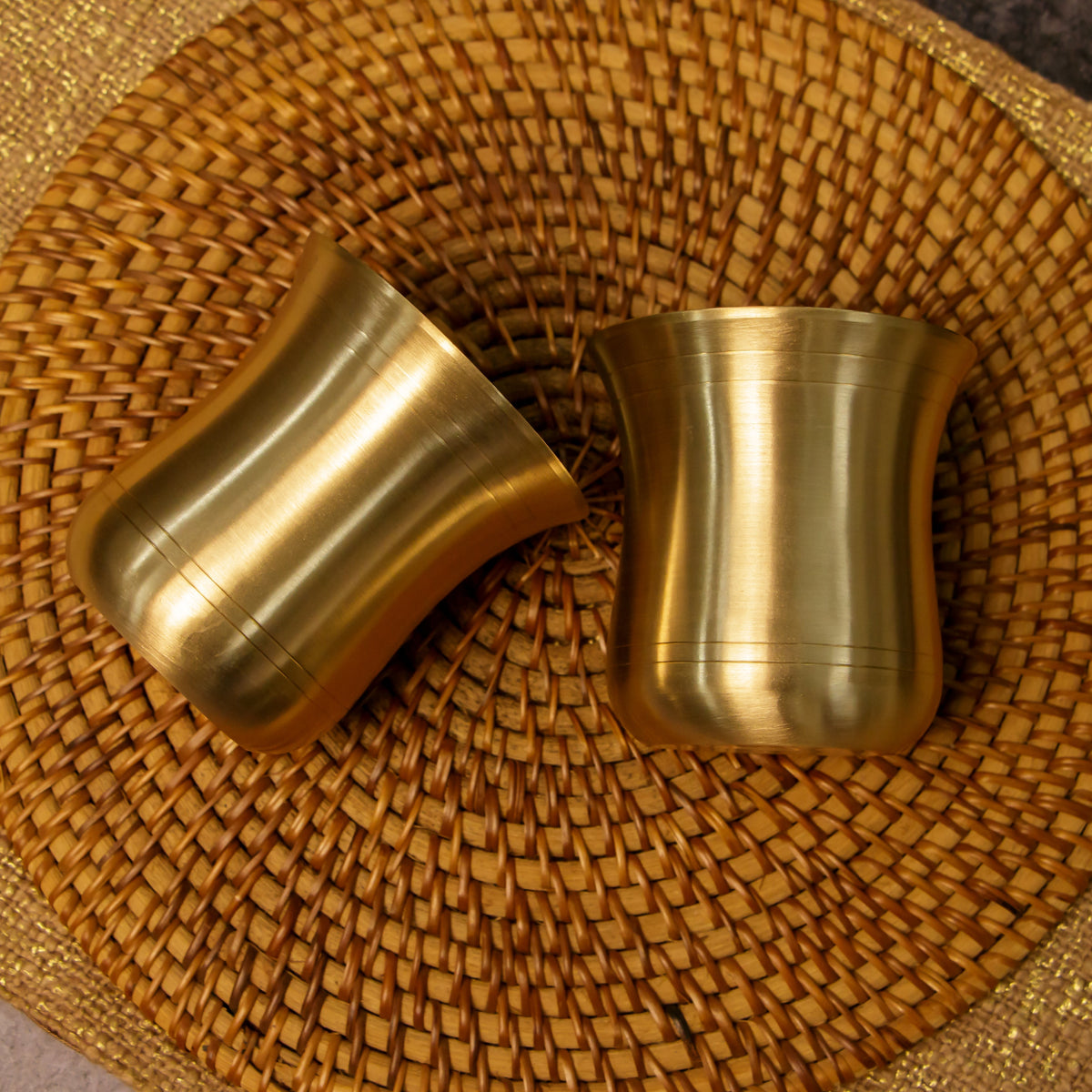
With use, it develops a natural patina that enhances its beauty and uniqueness. This gradual transformation reflects a philosophy often missing from contemporary design, the idea that age can add value rather than diminish it.
At Ambi Home, we celebrate materials that grow more beautiful with time because they mirror the stories of the homes they inhabit.
Kansa in Contemporary Interior Design
Although Kansa is rooted in tradition, its aesthetic versatility makes it remarkably suited to modern interiors.
Today's homeowners are increasingly drawn to spaces that blend heritage and contemporary design. Rather than choosing between traditional and modern styles, they seek interiors that feel layered, personal, and timeless.
Kansa contributes beautifully to this balance.
Its understated elegance complements a wide range of design aesthetics, including:
Minimalist Interiors
In minimalist spaces, Kansa introduces warmth and texture without overwhelming simplicity.
Contemporary Homes
The metal's refined finish creates visual interest while maintaining a sophisticated, modern appearance.
Heritage Inspired Spaces
Kansa naturally enhances interiors that celebrate traditional craftsmanship and cultural influences.
Organic Modern Design
Paired with wood, stone, linen, and natural fibers, Kansa contributes to a harmonious and grounded aesthetic.
Whether displayed as serveware, decorative accents, centerpieces, or statement pieces, Kansa adds depth and character to a home.
Its versatility lies in its ability to feel simultaneously ancient and contemporary.
Sustainability Through Longevity
One of the most compelling reasons for Kansa's growing popularity is its alignment with modern sustainability values.
True sustainability is not simply about materials. It is about longevity.
Products that last for decades reduce waste, encourage mindful consumption, and minimize the cycle of constant replacement.
Kansa embodies this principle naturally.
For generations, families have cared for and preserved their Kansa pieces rather than discarding them. Many households still use vessels inherited from grandparents and great grandparents.
This heirloom quality is increasingly rare.
In a culture often defined by disposability, Kansa reminds us that the most sustainable products are often those designed to endure.
When people invest in well crafted objects that remain relevant and functional for years, they consume less and appreciate more.
That shift benefits not only our homes but also the broader environment.
Why Ambi Home Celebrates Kansa
At Ambi Home, we are drawn to materials that carry meaning.
We believe the most beautiful homes are not built through trends or excess. They are created through thoughtful curation, through objects that reflect personal values, cultural heritage, and enduring craftsmanship.
Kansa embodies everything we admire.
It represents artistry over automation.
Longevity over disposability.
Heritage over trend cycles.
Every handcrafted Kansa piece tells a story that began long before it entered your home. It carries the knowledge of artisans, the richness of tradition, and the timeless appeal of thoughtful design.
More importantly, it becomes part of your story.
It accompanies everyday rituals.
It witnesses celebrations.
It creates memories.
And over time, it transforms from a beautiful object into something far more meaningful.
A Legacy Worth Preserving
In many ways, Kansa offers an important lesson for modern living.
It reminds us that the things we choose to surround ourselves with matter.
The objects in our homes influence our experiences, our routines, and even our memories. When those objects are crafted with care, rooted in heritage, and designed to last, they bring a different kind of value into our lives.
Not the value of novelty.
The value of permanence.
The value of connection.
The value of craftsmanship.
As the world continues to embrace conscious living and meaningful design, Kansa stands as a powerful example of how ancient traditions can remain relevant in contemporary life.
It is not simply a metal.
It is a symbol of enduring beauty, thoughtful living, and cultural legacy.
At Ambi Home, we see Kansa as more than a material. We see it as a reminder that the most extraordinary homes are built not with things that are quickly acquired and forgotten, but with pieces that tell stories, honor craftsmanship, and grow more meaningful with every passing year.
And perhaps that is the true beauty of Kansa.
It is not just something you own.
It is something you live with, cherish, and pass on.

Leave a comment
This site is protected by hCaptcha and the hCaptcha Privacy Policy and Terms of Service apply.