

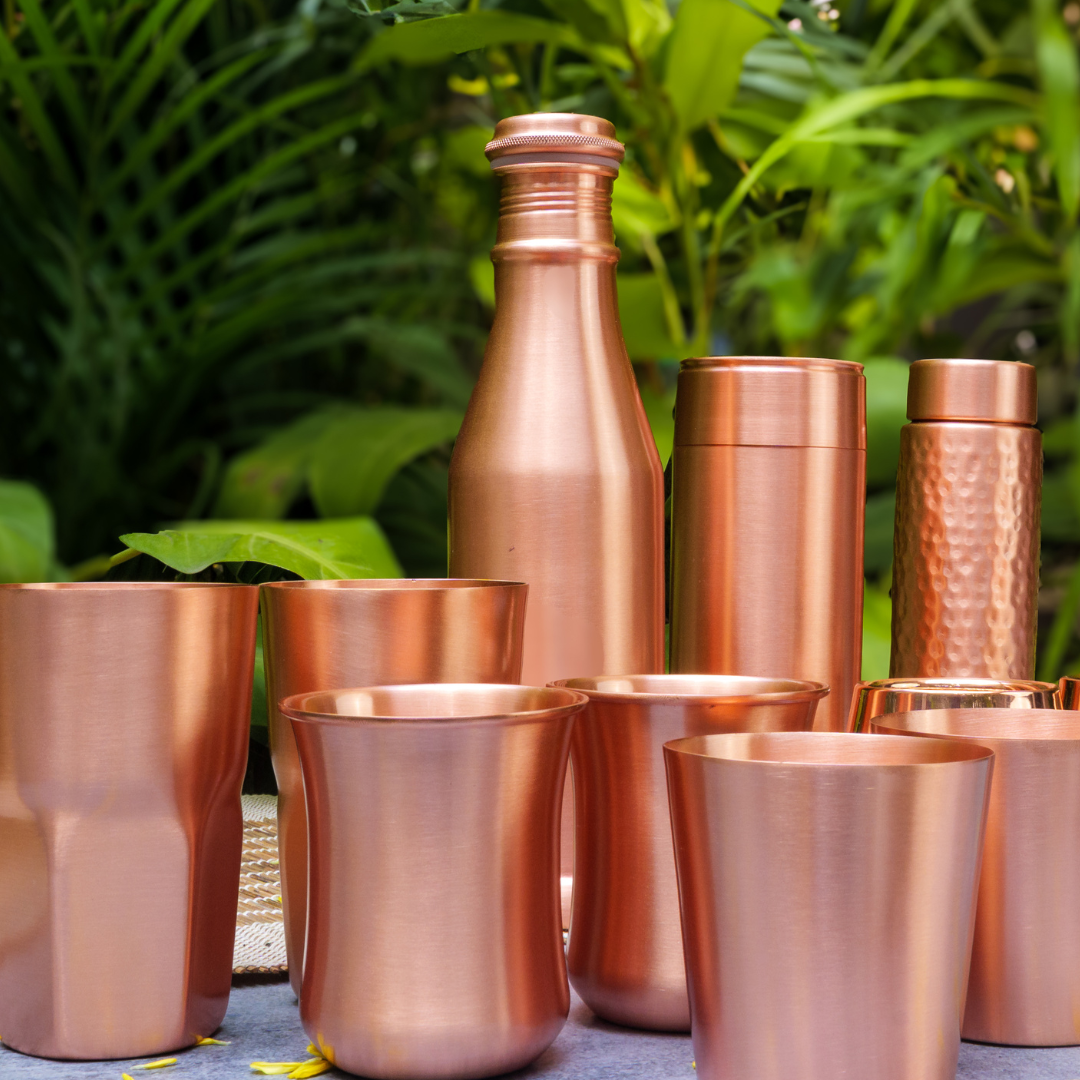
Long before water purifiers, filtration systems, and bottled water became part of everyday life, Indian households relied on a much simpler practice.
They stored water in copper vessels.
It was a habit passed down through generations. Copper lotas sat in courtyards, water vessels occupied a permanent place in kitchens, and filling them at the end of the day was as routine as preparing meals.
For many families, it wasn't a wellness ritual.
It was simply how things were done.
Today, as more people seek natural and intentional ways to approach everyday living, this centuries old practice is finding renewed relevance.
At Ambi Home, we've seen growing interest in handcrafted Copper Water Bottles from people who are curious about traditional materials and the role they have played in Indian households for generations.
So how does copper naturally purify water, and why has this practice endured for so long?
A Tradition Rooted in Everyday Life
Copper has been used in Indian homes for centuries, particularly for storing and serving water.
Long before modern purification technologies existed, households relied on materials and practices that had been refined through experience and tradition.
One such practice was storing water in copper vessels for several hours before drinking it.
Over time, this became an integral part of daily life.
Parents taught it to their children.
Grandparents passed it on to future generations.
And what began as a household habit eventually became one of the most enduring traditions associated with copper.
The Science Behind Copper and Water
Part of copper's lasting reputation comes from a natural process known as the oligodynamic effect.
In simple terms, copper has natural antimicrobial properties that can help reduce the presence of certain microorganisms when water is stored in a copper vessel for an extended period.
This characteristic has been studied extensively and is one of the reasons copper continues to be used in applications where hygiene is important.
While a copper vessel should never be viewed as a replacement for modern water purification systems when dealing with unsafe water sources, many people continue to appreciate copper as part of a broader approach to mindful living and traditional wellness practices.
At Ambi Home, we see this as a fascinating example of how traditional wisdom and modern understanding can complement one another.
Why Storing Water in Copper Became a Daily Ritual
The practice of storing water in copper vessels wasn't solely about functionality.
It also created a rhythm around hydration.
Water would often be stored overnight and consumed the following morning.
The vessel itself became part of a daily routine.
A familiar object on the dining table.
A copper lota in the kitchen.
A water vessel carefully cleaned and refilled each evening.
Today, many people recreate this ritual using a handcrafted Ambi Home Copper Water Bottle.
Not because they're trying to replicate the past exactly, but because they appreciate the sense of intention it brings to everyday life.
More Than Hydration
One of the reasons copper continues to resonate with modern consumers is that it encourages a more mindful relationship with everyday habits.
Drinking water is something we do countless times each day.
Yet it's often rushed and overlooked.
A handcrafted copper bottle invites a different experience.
You fill it.
You care for it.
You make space for it in your routine.
At Ambi Home, we've found that customers are often drawn to copper not simply because of its traditional associations, but because it helps transform an ordinary habit into something more intentional.
The Beauty of Traditional Materials
In today's world, convenience often takes priority.
Products are designed to be replaced.
Objects are chosen for efficiency.
Copper follows a different philosophy.
It asks for care.
It develops character over time.
And it rewards long term use.
At Ambi Home, our handcrafted Copper Water Bottles are inspired by this idea. They are designed not just to hold water, but to become part of the daily rituals that shape life at home.
Because sometimes the most meaningful objects are the ones we use every single day.
Living With a Copper Water Bottle
Unlike many modern products, a copper bottle benefits from regular attention.
A quick clean.
Occasional polishing.
The habit of filling it before bed.
These small actions create a connection between the user and the object.
What might seem like maintenance to some often becomes part of the experience itself.
At Ambi Home, we believe this relationship with everyday objects is one of the reasons traditional materials continue to hold such enduring appeal.
They're not disposable.
They're designed to be lived with.
Why Copper Still Matters Today
The world has changed dramatically over the centuries.
The way we store water has changed.
The way we live has changed.
Yet copper continues to find a place in modern homes.
Partly because of its natural properties.
Partly because of its beauty.
And partly because it reminds us that some traditions survive for a reason.
Not because they're old.
But because they continue to offer value.
Whether it's a handcrafted copper bottle on a bedside table or a copper vessel that becomes part of a morning routine, these objects carry forward a tradition that has endured across generations.
The Ambi Home Perspective
At Ambi Home, we see copper as more than a material.
We see it as a connection between heritage and modern living.
Our handcrafted Copper Water Bottles are inspired by traditions that have quietly shaped Indian households for centuries while being designed for contemporary lifestyles.
Because the most meaningful rituals are often the simplest ones.
A glass of water in the morning.
A bottle refilled each evening.
A habit repeated day after day.
And sometimes, that's exactly where tradition and intention come together.
Explore Ambi Home's handcrafted Copper Water Bottle collection and discover how a timeless material continues to inspire modern living.

Leave a comment
This site is protected by hCaptcha and the hCaptcha Privacy Policy and Terms of Service apply.