

Kansa and Wellness: How an Ancient Tradition Fits Into Modern Mindful Living
An Ambi Home Journal
In today's world, wellness is everywhere.
Every week seems to bring a new supplement, a new routine, a new superfood, or a new trend promising better health and balance. Modern consumers are constantly searching for ways to improve their well being, often looking ahead to the next innovation.
Yet sometimes, the most meaningful wellness practices are not the newest ones.
They are the traditions that have quietly endured for generations.
Practices passed down through families.
Rituals woven into everyday life.
Objects that have remained relevant not because they were fashionable, but because they became part of a lifestyle centered around mindfulness, balance, and intention.
Kansa is one such tradition.
For centuries, Kansa has been present in Indian homes, accompanying family meals, daily routines, and cultural practices. Long before wellness became a global industry, Kansa vessels were already part of a way of living that valued simplicity, consistency, and thoughtful habits.
Today, as people seek a more intentional approach to health and well being, Kansa is finding its place in modern homes once again.
At Ambi Home, we often meet customers who are initially drawn to Kansa because of its beauty and craftsmanship. But many are equally fascinated by its long standing association with traditional wellness practices and mindful living.
So what makes Kansa special, and why has it remained relevant for so many generations?
A Tradition That Has Stood the Test of Time
Few materials have remained part of everyday life for as long as Kansa.
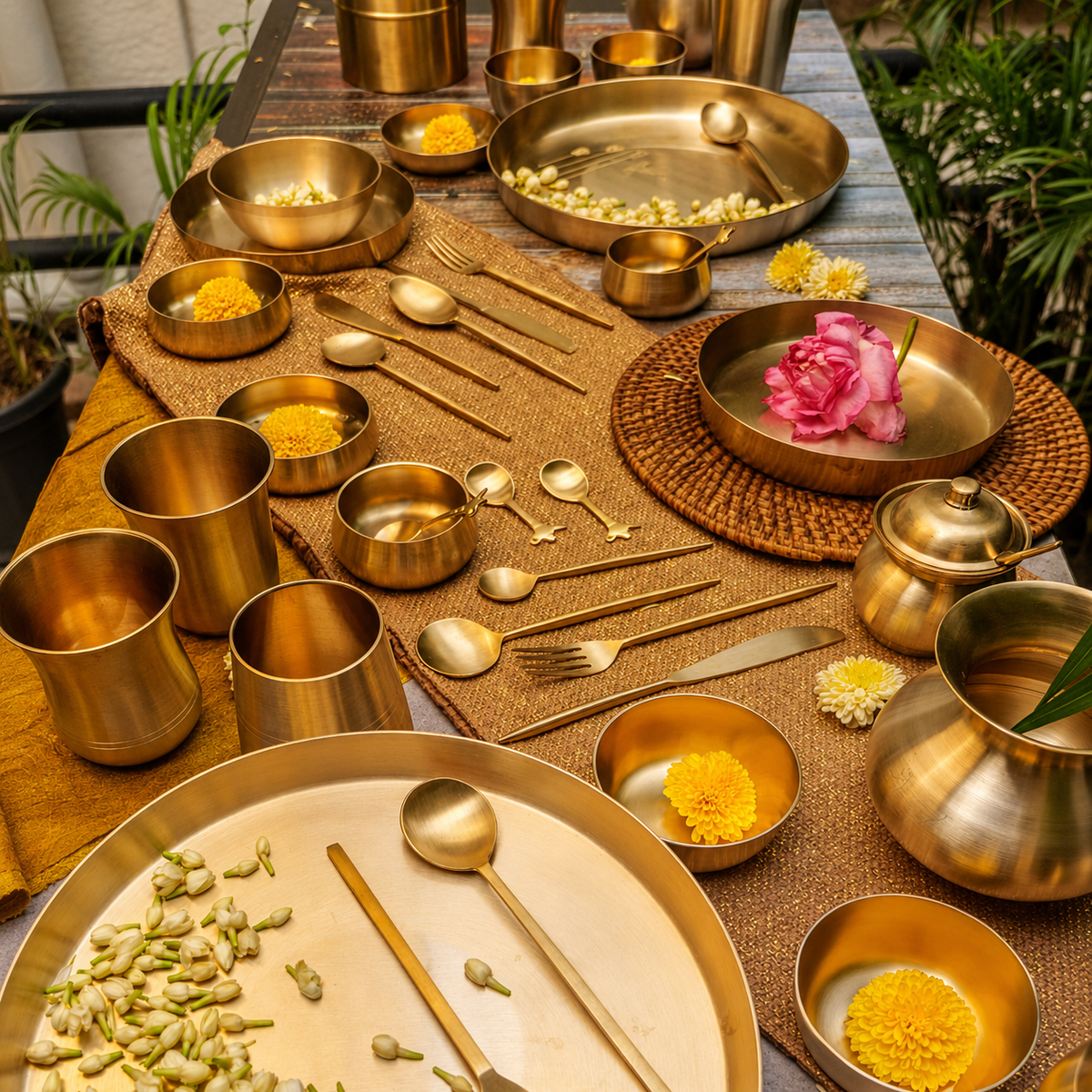
Crafted from an alloy of copper and tin, Kansa has been used in Indian households for centuries. It was commonly found in the form of thalis, bowls, tumblers, serving vessels, and ceremonial objects, becoming an integral part of both daily routines and festive occasions.
Its enduring presence is significant.
Many household traditions naturally fade over time, replaced by newer alternatives and changing lifestyles. Yet Kansa has continued to hold cultural value across generations.
Part of this longevity comes from its deep connection to Indian traditions and Ayurvedic practices.
Historically, Kansa was often regarded as a preferred material for dining and food service. Families invested in Kansa pieces not simply because they were functional, but because they believed these objects contributed to a thoughtful and balanced way of life.
Today, while lifestyles have evolved dramatically, many people continue to appreciate Kansa for the same reasons.
It represents continuity.
A connection between past and present.
A reminder that some traditions remain meaningful regardless of how much the world changes.
Wellness Begins with Everyday Rituals
One of the most overlooked aspects of wellness is that it is rarely built through dramatic changes.
More often, it emerges from small habits practiced consistently over time.
A morning walk.
A quiet cup of tea.
A family meal shared without distractions.
These simple rituals shape our daily lives far more than occasional bursts of motivation ever could.
At Ambi Home, we believe the objects we use every day play an important role in these rituals.
A beautifully crafted utensil may seem like a small detail, but it influences how we interact with our environment.
It encourages us to slow down.
To pay attention.
To be present.
This is one of the reasons many people feel drawn to Kansa.
Its weight, texture, and craftsmanship create a different experience from mass produced alternatives.
When a meal is served in a handcrafted Kansa thali or Kansa bowl, there is often a greater sense of intention surrounding the experience.
The meal feels more deliberate.
The moment feels more meaningful.
And in a world filled with distractions, that sense of presence can be surprisingly valuable.
The Connection Between Kansa and Mindful Eating
Modern wellness conversations increasingly emphasize the importance of mindful eating.
Rather than rushing through meals, mindful eating encourages people to engage fully with the experience of food, its flavors, textures, aromas, and the act of nourishment itself.
While Kansa is not a shortcut to mindfulness, it can naturally support the rituals that encourage it.
Unlike disposable or purely functional utensils, handcrafted Kansa pieces invite attention.
Their craftsmanship is visible.
Their presence feels substantial.
Their beauty encourages appreciation.
Many people find that serving meals in thoughtfully crafted Kansa dinnerware transforms ordinary dining into a more intentional experience.
A simple dinner becomes an opportunity to pause.
A family meal becomes an occasion for connection.
The act of eating becomes less hurried and more conscious.
At Ambi Home, we see this as one of Kansa's most meaningful contributions to modern wellness, not through dramatic promises, but through subtle shifts in everyday habits.
The Tradition of Drinking Water from Kansa
One of the most common ways people begin incorporating Kansa into their homes is through a Kansa tumbler.
For generations, Indian households have used metal vessels as part of their daily water drinking rituals.
These traditions were often simple.
A tumbler kept beside the bed.
A morning glass of water.
A vessel used consistently throughout the day.
Today, many people continue these practices not only because of tradition but because they offer a sense of routine and mindfulness.
A handcrafted Kansa tumbler transforms an everyday action into a small ritual.
Something that might otherwise be rushed becomes a moment of awareness.
This may seem like a minor detail, but wellness is often built from exactly these kinds of consistent habits.
The ritual itself becomes valuable.
Not because it is complicated.
But because it encourages presence and intentionality.
A Material That Encourages Conscious Living
Beyond its historical associations, Kansa aligns naturally with many values that define contemporary wellness culture.
Modern consumers are increasingly seeking alternatives to disposable lifestyles.
They are choosing products that last longer, carry meaning, and contribute to a more thoughtful way of living.
Kansa embodies these qualities.
Unlike products designed for frequent replacement, a handcrafted Kansa piece is created with longevity in mind.
A tumbler can remain part of a daily routine for years.
A serving bowl can accompany countless family meals.
A thali can become associated with celebrations and traditions that span generations.
This durability reflects a broader philosophy of conscious consumption.
Choosing fewer things.
Choosing better things.
Surrounding ourselves with objects that continue to add value over time.
At Ambi Home, we see wellness not only as something that happens within the body, but also as something shaped by the environments we create.
The materials we live with matter.
The objects we use every day matter.
And Kansa offers a way to bring greater intention into both.
The Beauty of Slowing Down
Perhaps the most powerful health benefit associated with Kansa has little to do with the material itself.
It lies in the lifestyle it represents.
Modern life often rewards speed.
Faster meals.
Faster purchases.
Faster routines.
Yet wellness frequently asks us to move in the opposite direction.
To slow down.
To notice.
To appreciate.
Kansa naturally supports this mindset.
Its handcrafted nature reminds us that quality takes time.
Its heritage reminds us that meaningful traditions are built slowly across generations.
Its presence encourages us to bring greater awareness to everyday moments.
At Ambi Home, we believe this philosophy is increasingly relevant.
The healthiest habits are often the simplest.
Sharing meals with loved ones.
Creating daily rituals.
Choosing objects that bring joy and meaning.
Making space for mindfulness within ordinary routines.
Kansa fits beautifully within this approach to living.
Bringing Kansa into Your Home
For those curious about Kansa, the journey does not need to begin with a complete transformation.
Many people start with a single piece.
A handcrafted Kansa tumbler for a daily water ritual.
A pair of Kansa katoris for family meals.
A serving bowl that becomes part of gatherings and celebrations.
Others choose a traditional Kansa thali to create a more intentional dining experience.
What begins as one piece often grows naturally over time.
Not because of obligation.
But because the material becomes part of everyday life.
Part of daily rituals.
Part of family traditions.
Part of the home's story.
The Ambi Home Perspective
At Ambi Home, we believe wellness is not about chasing every new trend.
It is about creating a lifestyle rooted in intention, balance, and meaningful habits.
Our handcrafted Kansa tumblers, bowls, katoris, serving platters, and thali sets are inspired by traditions that have endured for generations.
Not because they were fashionable.
But because they brought lasting value to everyday life.
The health benefits of Kansa are often discussed in different ways by different communities, traditions, and philosophies.
What remains undeniable is its connection to mindful living, heritage craftsmanship, and a slower, more intentional approach to daily routines.
And perhaps that is why Kansa continues to find a place in modern homes.
Not simply as a utensil.
But as a reminder that wellness often begins with the small rituals we practice every day.
The glass of water we drink in the morning.
The meal we share with family.
The moments we choose to be fully present.
Because sometimes, the most meaningful wellness traditions are not the newest ones.
They are the ones that have quietly stood the test of time.

Leave a comment
This site is protected by hCaptcha and the hCaptcha Privacy Policy and Terms of Service apply.